
Information Overload
Courses, articles, videos, certifications, and opinions are everywhere. Knowing where to start — or what matters most — is harder than ever.
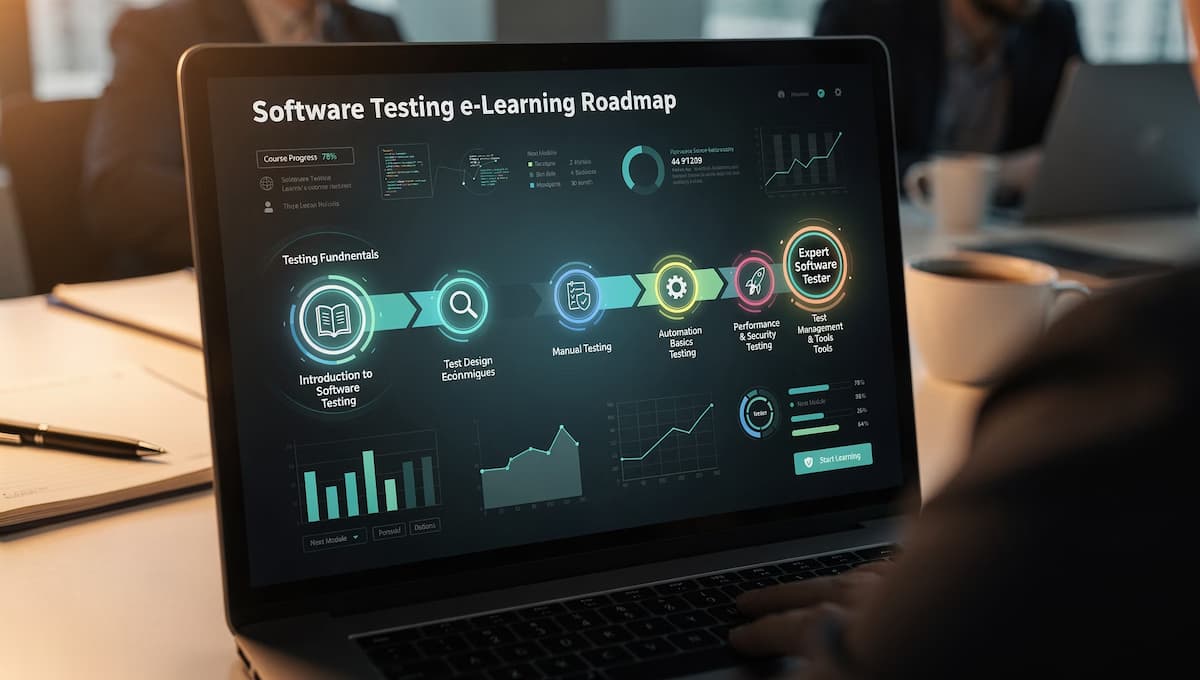
A practical roadmap that helps software testing professionals build on proven foundations, expand their capabilities, and continue growing with the profession.
Software testing has always evolved alongside technology. As software systems become increasingly connected, automated, and AI-powered, testing professionals face a growing number of opportunities to expand their capabilities and continue developing their careers.
The STeP Learning Roadmap was created to help you identify where you are today, what capabilities you may want to develop next, and how different skills connect throughout your professional journey.
This is not a rigid curriculum. It is a flexible guide designed to support continuous professional growth — adapting to your career goals, experience level, and areas of interest.
The challenge is not finding information. The challenge is finding a practical path that connects learning to professional growth.
Courses, articles, videos, certifications, and opinions are everywhere. Knowing where to start — or what matters most — is harder than ever.
The STeP Roadmap connects learning to professional growth, helping you build technical literacy, AI literacy, and professional capability progressively.
Rather than prescribing a single path, the roadmap adapts to different career goals, experience levels, and areas of professional interest.
Modern testing professionals grow through a practical learning journey: first building strong testing foundations, then learning how AI changes testing work, and finally expanding into technical skills such as API testing and test automation engineering.

STeP 1

STeP 2

STeP 3
Strong testing foundations remain essential regardless of how tools and technologies evolve. This STeP helps learners build the mindset, vocabulary, and practical testing skills needed to understand software quality, plan testing work, design test cases, report bugs, and communicate progress clearly.
STeP 1 is required for new entrants and career-switchers. It is optional as a refresher for experienced testing and QA professionals already working in the field.
AI is fundamentally reshaping how software testers work — from automating repetitive tasks to generating test data, surfacing edge cases, and accelerating exploratory analysis. Building AI literacy is no longer optional; it is becoming a core professional skill for anyone working in software quality.
This STeP helps learners develop that literacy in two directions: using AI as a practical assistant in day-to-day testing work, and developing the critical skills needed to evaluate, challenge, and test AI-powered systems themselves. Together, these tracks prepare testers to thrive in an AI-augmented industry.
This track covers how to leverage AI tools, prompts, and generative capabilities to work faster, smarter, and more effectively as a tester.
Build foundational AI literacy — what AI is, how it works, and why it matters for software quality professionals.
Learn how to collaborate with AI tools effectively by crafting clear, purposeful prompts that produce useful testing outputs.
Explore practical ways generative AI can support test planning, test case creation, and documentation tasks.
A practical survey of concrete techniques for integrating AI assistance into manual and exploratory testing workflows.
Discover how to build or configure tailored AI tools and workflows that fit your team's specific testing needs.
This track develops the specialized skills needed to evaluate, challenge, and quality-assure software products that are powered by AI and machine learning.
Understand the unique competencies, mindsets, and domain knowledge required to test AI-driven applications effectively.
Examine how testing AI systems differs from testing conventional software, including non-determinism, bias, and data dependencies.
Learn to recognize and document failure modes unique to AI systems, such as hallucinations, drift, and training data issues.
Apply exploratory testing strategies to AI systems without needing access to underlying models or training data.
Survey the emerging landscape of tools, frameworks, and structured approaches designed specifically for AI system evaluation.
Practice AI testing skills through hands-on demonstrations and guided exercises using realistic AI-powered scenarios.
This STeP separates two important capabilities: using AI to support testing work, and testing AI-powered systems themselves.
This STeP is designed for learners who want to expand into technical testing roles. It includes API and integration testing, plus a progressive automation pathway covering Selenium, modern Playwright automation, and advanced AI-assisted automation practices.
Cultivate practical API testing skills and learn how contemporary software systems communicate via services and integrations.
Build deep automation engineering skills through a progressive pathway that begins with Selenium fundamentals, advances into modern Playwright automation, and extends into AI-assisted automation practices.
This series helps learners progress from core automation engineering skills to modern web automation and finally to AI-assisted workflows, where engineers learn how to direct AI across the automation lifecycle while remaining fully in control of quality decisions.
This track is recommended if you want to move toward API testing, automation engineering, SDET, or modern quality engineering roles.
For learners entering STeP 3, these optional preparation resources can help build confidence with programming, web technologies, and automation fundamentals.
The roadmap helps you identify what capabilities to develop next. These companions are designed to support continuous learning, professional communication, knowledge management, and practical application as you continue growing with the profession.

Practice stakeholder conversations, quality advocacy, leadership discussions, and professional communication through realistic workplace scenarios. Build the confidence to communicate quality insights clearly and effectively.
Explore QA Voice Coach → (opens in a new tab)
Stay connected to emerging ideas, evolving practices, industry discussions, and AI-era testing perspectives through short, focused learning content designed for busy professionals. Continuous learning doesn't end when a course is completed.
Explore Daily Testing → (opens in a new tab)
Save your AI prompts directly from a conversation with a simple instruction, and run them again anytime with one click. Over time, build a library of prompts you can rely on.
Explore PromptVault → (opens in a new tab)AI companions can help accelerate learning, deepen understanding, and make knowledge more accessible throughout your professional growth journey.
Access specialized AI assistants designed to support software testing, learning, and professional development. Explore testing concepts, generate ideas, analyze requirements, create test scenarios, and accelerate learning through guided conversations.
Transform articles, documentation, books, research materials, and learning resources into an interactive knowledge companion. Ask questions across multiple sources, generate summaries, identify key concepts, and build deeper understanding as you progress through the roadmap.
Together, these companions help turn information into understanding and understanding into practical capability.
The profession will continue to evolve. The most successful testing professionals are not those who try to learn everything — they are the professionals who continuously build on strong foundations, expand their capabilities, and remain engaged with the profession as technology continues to change.
The STeP Learning Roadmap is designed to help you do exactly that — one practical step at a time.